Issue 254
Build the youth development ecosystem
I'm still doing that. I add new links to the library and new blog articles weekly. I maintain lists of volunteer-based tutor, mentor and learning programs that serve the Chicago region and encourage volunteers, donors, media, students and parents to seek them out.
Visit https://tutormentorexchange.net/
While a majority of what I share is from my work helping Chicago tutor/mentor programs grow, the resources I share come from all over the USA and from other countries. The actions I've piloted since 1993 need to be duplicated in every area with concentrations of persistent poverty, where access to opportunity is consistently lower than in other places and where funding is scarce.
Please share this so others in your city can find and use these resources!
There is a growing library of visualizations for you to learn from
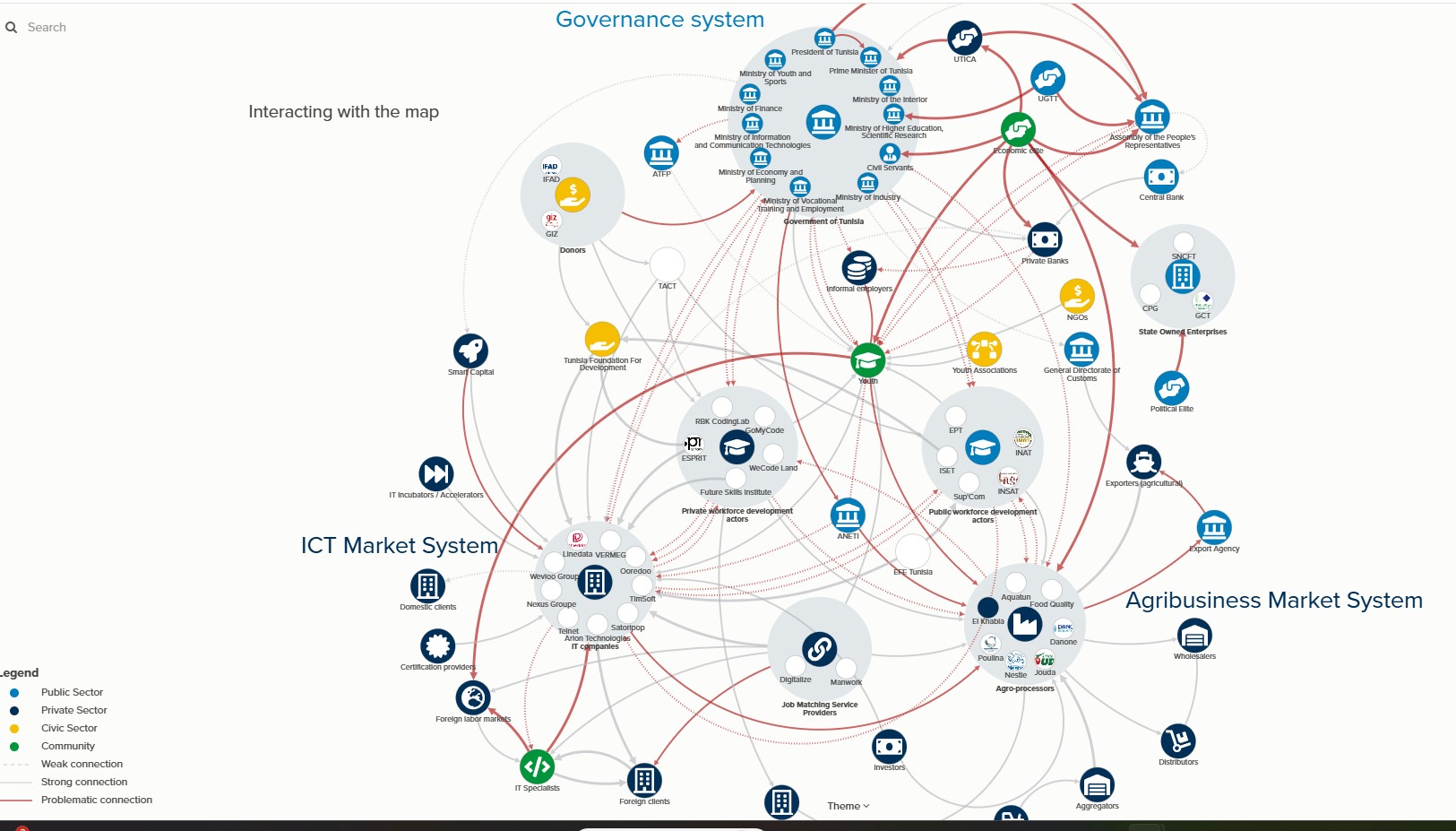
This concept map is a guide that leads you to many more articles about concept mapping, systems thinking, network building, etc."
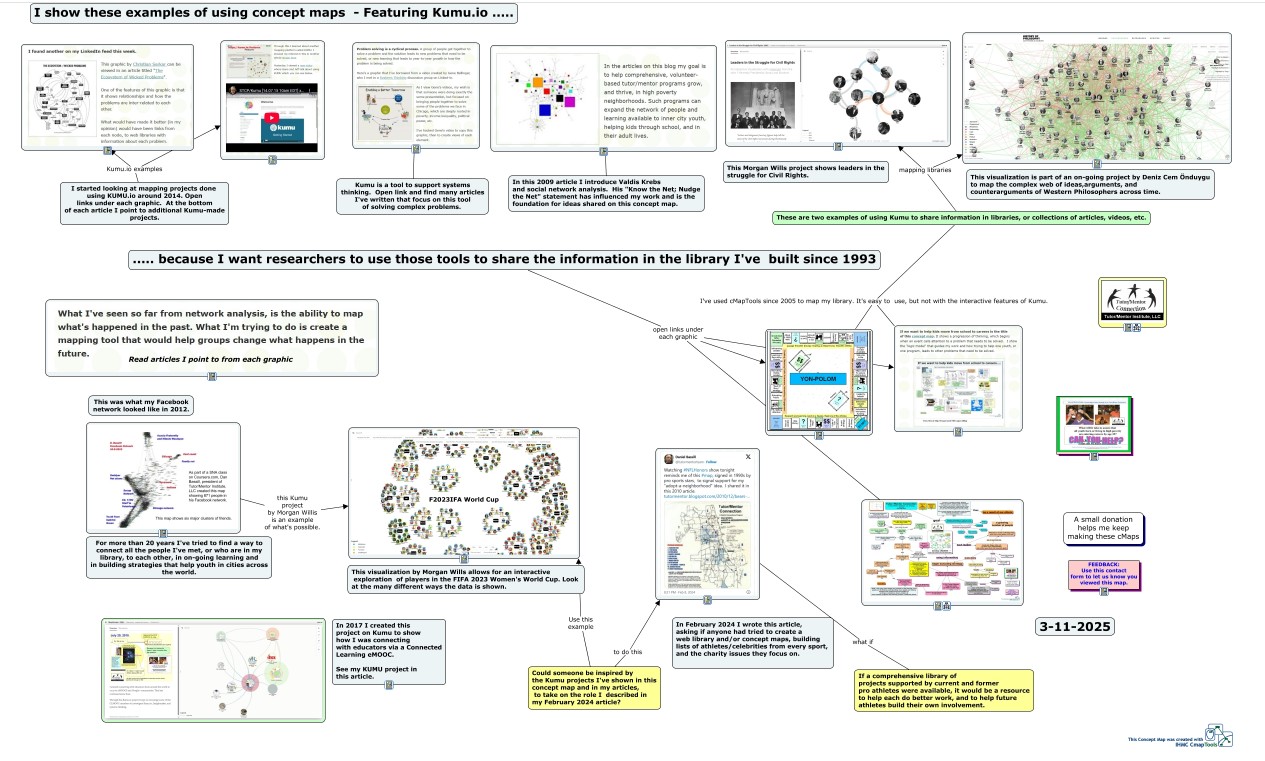
Click here to open this concept map. Then open the links under each node and explore all of the ideas that I point to. Do you create maps like this? Share them on LinkedIn and let's connect.
How do we keep attention focused on social organizations long enough for them to have an impact? What roles might youth and interns take?
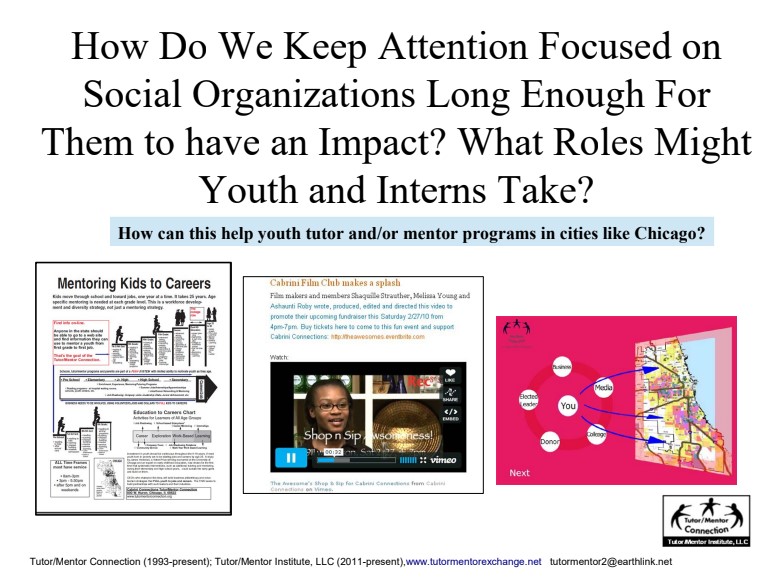
In his comment he wrote: “your model treats students not just as learners, but as part of the infrastructure that helps ideas move into communities. Universities have millions of students. Most spend years learning about marketing, communications, data science, public policy, education, business, and technology. Yet relatively little of that capacity is organized around helping communities solve real problems while students are learning. I wonder how much impact we could create if we treated student talent as a civic asset, not just a workforce pipeline."
That's been my goal since forming the Tutor/Mentor Connection. I posted two visual essays showing this vision in this article on Substack.com. I hope you'll read and share it, and make it a reality if you have the resources and/or university connections.
What if volunteers, donors, media and policy-makers were actively looking for tutor/mentor programs, while we keep actively trying to find them and motivate them to support us?
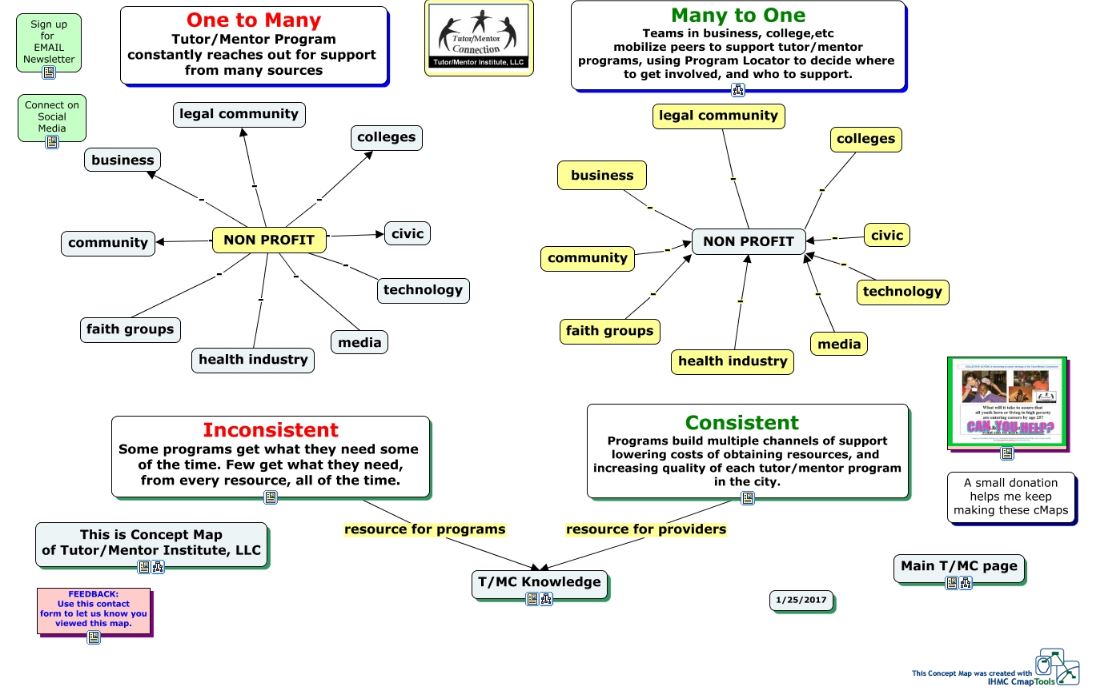
Those who lead small non profits, or are struggling to get social benefit ideas launched, may relate to this One-To-Many graphic. We're constantly reaching out in many different directions, trying to find the help we need. We're like fish in a bowl, competing with thousands of others for a limited amount of dollars and volunteers. Unless you've got a powerful marketing machine, or are well connected in donor circles, you succeed some of the time, but not most of the time, and you spend tremendous amounts of emotional capital and energy all of the time.
Through the Tutor/Mentor Connection, I'm trying to change this. I'm trying to recruit leaders in many places who lead a strategic thinking process in their organization that aligns social benefit with corporate and organizational strategy. Such leaders will use their own advertising, visibility and resources to support the growth of volunteer-based tutor/mentor programs that lead kids to careers, because it's a core business strategy.See this concept map in my article titled "Changing how social benefit organizations get funded." Open the concept map at http://tinyurl.com/TMI-Many-to-1
I first wrote this in 2007!!! It's as relative now as it was then.
Think of roles students could learn as they go through school, as network builders, influencers (in a good way), facilitators.
Engage your volunteers and alumni in program planning and development
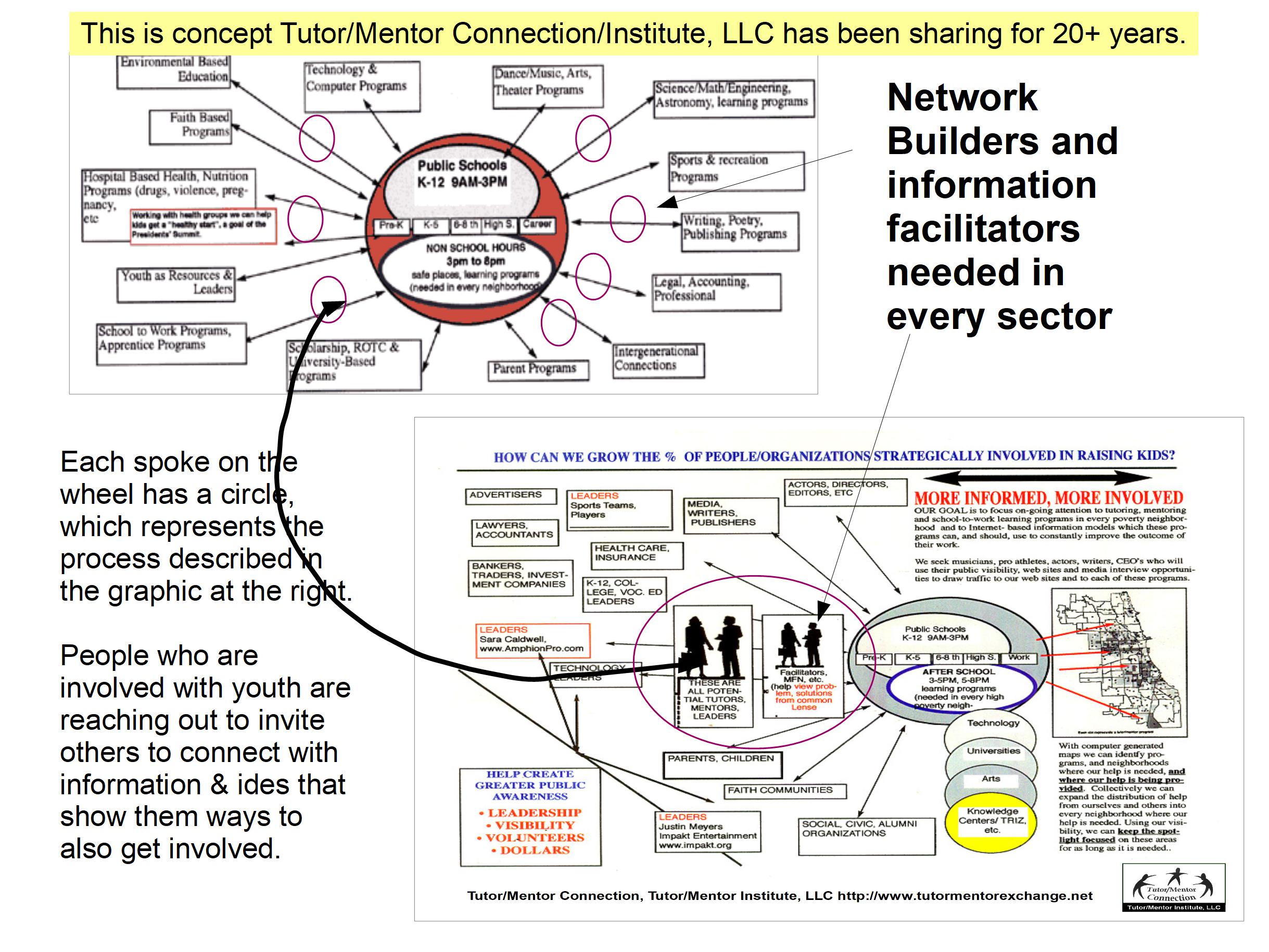
I've used these graphics since the 1990s to show how volunteers from various workplaces can become intermediaries who reach into their network and draw volunteers and donors to volunteer-based tutor/mentor programs. That only happens when programs have a strategy that recruit and supports kids and volunteers, so they stay together for multiple years.
The top graphic shows the many types of learning that could be included in site-based non-school programs, with the help of volunteers and their companies. I show this in detail in this Total Quality Mentoring visual essay.
Now look at the stories at the top of this newsletter again. Who's building a database that can be used to extend invitations for everyone in the ecosystem to connect on an on-going, multi-year basis?
Visit this page and see analysis of the 1994-2015 Tutor/Mentor Leadership and Networking Conferences, by students from Indiana University. See what I was able to accomplish with limited and inconsistent resources. As you view this imagine how much more you could do if you had the backing of a major investor/donor.
In this article I share a 2009 article by Chris Warren, a Northwestern University Public Interest Program Fellow who served with my organization for a year. His example of mapping universities is something anyone could do, using the tools created by the Indiana students.
As you look at my visualizations, picture places in many neighborhoods where youth and volunteers have been connecting weekly for many years.
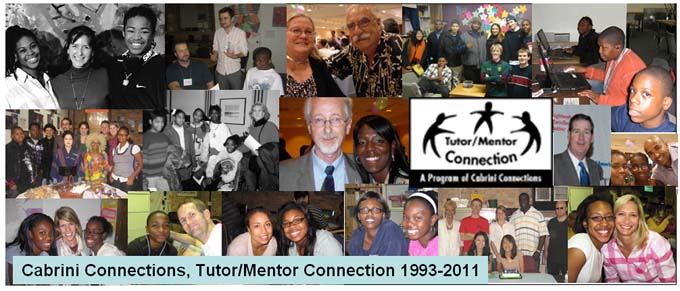
I led the tutor/mentor program at the Montgomery Ward Corporate Headquarters in Chicago from 1975 to October 1992. Then, I formed Cabrini Connections in late 1992, which I led through mid 2011. This collection of photos is an example of the many people who these programs connected each week. The first program is now Tutoring Chicago, and just finished it's 60th year. That's long-term!
Visit this page and see my map showing locations of many Chicago tutor/mentor programs. Find one or more to learn from and/or give your support.
View latest links added to the Tutor/Mentor library - click here
Resources and Announcements.
* Greater Pittsburgh Learning Ecosystem - click here
* State of Nonprofits in 2026 - What can Funders Do? - click here
* Building and Growing a Collective Impact Project - click here
* Fiscal Maps - a Planning Tool - click here
* Chicago Mentoring Collaborative - click here
* MENTOR celebrates 35 years of support for mentoring in the USA and the world. - click here
* MyChiMyFuture - Chicago youth programs map and directory - click here; visit the website- click here
Visit this page for the list of Featured Links that I usually post in this newsletterclick hereRead These Tutor/Mentor blog articles
(Do you have a blog? Share it on social media.)
* Unleashing Influence of Business School Students - click here
* 2.6 million visits to my website since July 2025. 518,578 to the Tutor/Mentor blog in May 2026 - click here
* Honor Their Sacrifices. Keep Fighting. Memorial Day article - click here
* Influencing Career Aspirations - Role of Business & Mentoring - click here
* Also read articles at MappingforJustice.blogspot.com
Visit this page to find a list of highlighted resources that I usually have included in this newsletter.
click here
Thank you for reading this month's newsletter.
For those who don't want to receive this newsletter in their email, a copy of this and past issues can be found in my www.tutormentorexchange.net website.
I encourage others to duplicate what I'm doing. Write a blog and share your own vision, strategy and challenges. Share your link and I'll add it to this list in the Tutor/Mentor library.
View current and past newsletters at this link.
To subscribe, just Click here.
(If you subscribe, don't forget to respond to the confirmation email).
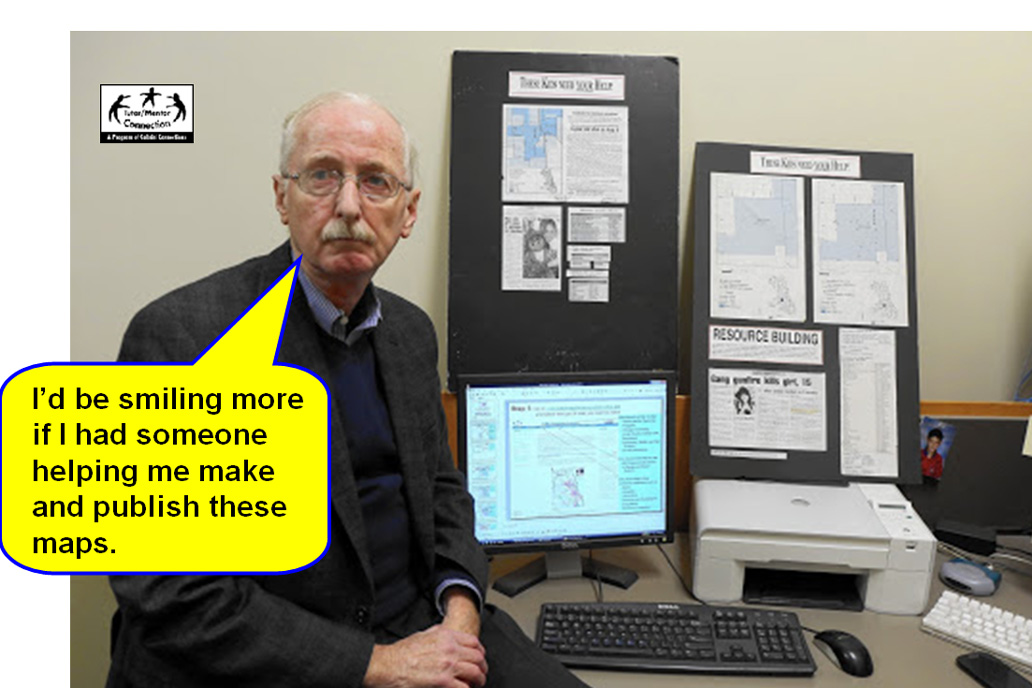
Please help fund the Tutor/Mentor Institute, LLC
Visit this page and add your support so I can keep this information freely available to you and the world.
Tutor/Mentor Connection (1993-present)
Tutor/Mentor Institute, LLC (2011-present)
Serving Chicago and the world since 1993. Connect with Dan Bassill, founder and leader on one of the social media platforms.
eMail Dan at
Social Media Connections
Do a web search for "tutor mentor" and you'll find us on many platforms.
Connect with Dan at
BlueSky - https://bsky.app/profile/tutormentor.bsky.social
Dan Bassill on LinkedIn
Tutor/Mentor Institute, LLCon Facebook group
Dan Bassill on Facebook Page
Dan Bassill on Mastodon - https://mastodon.social/@tutormentor1,
https://mastodon.garden/@tutormentor1 and @
Dan Bassill on Instagram and on Twitter (X)
Dan Bassill on Medium - https://medium.com/@danielfbassill
Dan Bassill on Substack.com - https://substack.com/@danielbassill319958?